The Little Notch That Keeps a Page Open
The little notch that keeps a page open can steady a readable page during a brief pause, while helping you avoid a folded corner or slipping scrap.
The common mistake with a book that keeps closing is to press harder in the middle of the page. That can crease the paper without holding the covers in place. The little notch that keeps a page open is a temporary gap formed by the page edges and a light thumb hold; how well it works depends on the book and your grip.
The closing problem
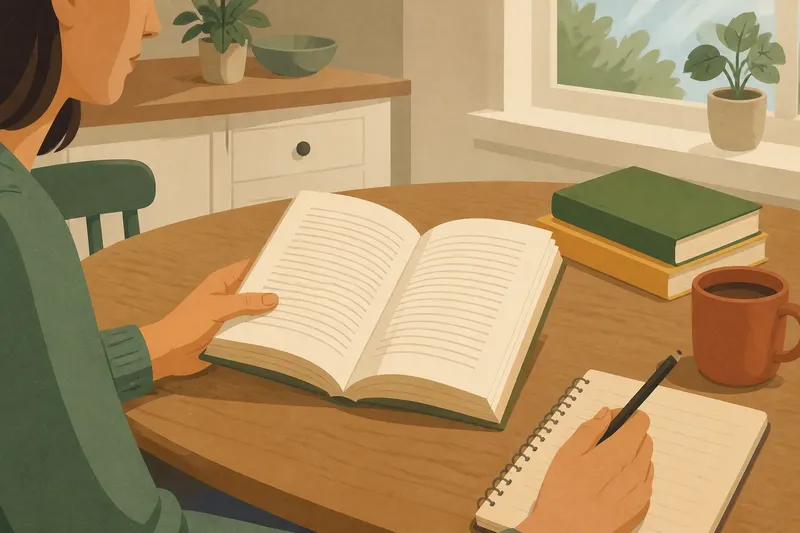
Say you are reading a paperback at a kitchen table and pause to write a note. You set the book down, and its cover swings shut. A folded corner would leave a mark; a loose scrap might slip out when you move the book.
The simple hold described here is for a short pause, not a way to leave a book open unattended. It uses the book’s natural curve, but it cannot make every binding stay open. If the covers move freely or the page springs back, a book holder or bookmark may suit the task better.
How the notch forms
When a book opens, its leaves fan into a shallow curve. A thumb resting near the outer edge can steady some of those leaves and leave a small gap beside the page you are reading. This is a temporary space, not a cut or a permanent dent.
The grip does not lock the book. It may help keep the chosen page visible while you briefly use your other hand, but the result varies with page stiffness, binding, cover weight and hand position. Treat the notch as a small adjustment to try, not a reliable substitute for a stand.
Finding a comfortable hold
Start with the book open on a stable surface. Rest one hand lightly near the lower outer edge, keeping your thumb clear of the text. If the page begins to slide over the words, shift your thumb towards the page edges so it steadies more of the fan. If your thumb blocks the line, move it down into the margin.
Use only comfortable pressure. If the page buckles, ease your grip; if the whole book slides, support the lower cover on the table rather than pinching the paper harder. A stiff page or tight binding may not form a useful gap, so stop if the hold feels awkward.
Imagine a reader with a paperback that closes as they reach for a pencil. They first press the middle of the page, which leaves the cover free to swing. They shift their thumb to the lower outer edge, then rest the lower cover on the table. If the page remains visible without buckling, the hold is adequate for a brief note; if it still closes, they use a book holder instead.
Choosing another method
A thumb hold can be convenient for a moment, but it occupies one hand and needs a comfortable grip. A bookmark marks the place without keeping the book open. A purpose-made book holder can support the pages for longer reading or note-taking, though it takes space and needs to fit the book.
- If the page stays visible with light contact, use the thumb hold for a brief pause; if it closes, use a book holder.
- If the paper buckles, release the pressure and reposition your thumb; if it still buckles, stop using the hold.
- If your thumb covers the text, move it into a blank margin; if no clear margin is available, choose a holder.
- If the lower cover slides on the table, steady the cover on a stable surface; if it continues to move, use a holder with a secure base.
- If the binding resists opening, do not force it; use a bookmark to save your place and consult the book’s care guidance if needed.
- If you need both hands free for more than a short pause, set the book in a suitable holder; if none is available, close it with a bookmark in place.
Questions about the notch?
Does the notch mark the page?
No. It is a temporary gap created by the page edges and your grip. Use a bookmark if you need to identify the page after closing the book.
Will it work in every book?
No. Paper stiffness, binding and cover movement all affect whether the pages settle into a useful position. If the book resists opening, avoid forcing it and choose another way to keep your place.
How much pressure should I use?
Use only enough contact to steady the page edges comfortably. If the paper buckles or your hand feels strained, release your grip and try a different method.
Can it replace a book holder?
It may help during a brief pause, but it does not support a book independently. A holder is more suitable when you need both hands free or the book will not stay open with a light grip.
A brief, gentle hold
The little notch that keeps a page open is best understood as a temporary arrangement, not a special feature or fixed trick. Notice whether a light hold near the page edges keeps the text visible without bending the paper; if not, a bookmark or book holder is the simpler choice.